
Skip to content
NDT & Repair

Remote Inspection Technology

Inspection without staging, without entry, without risk

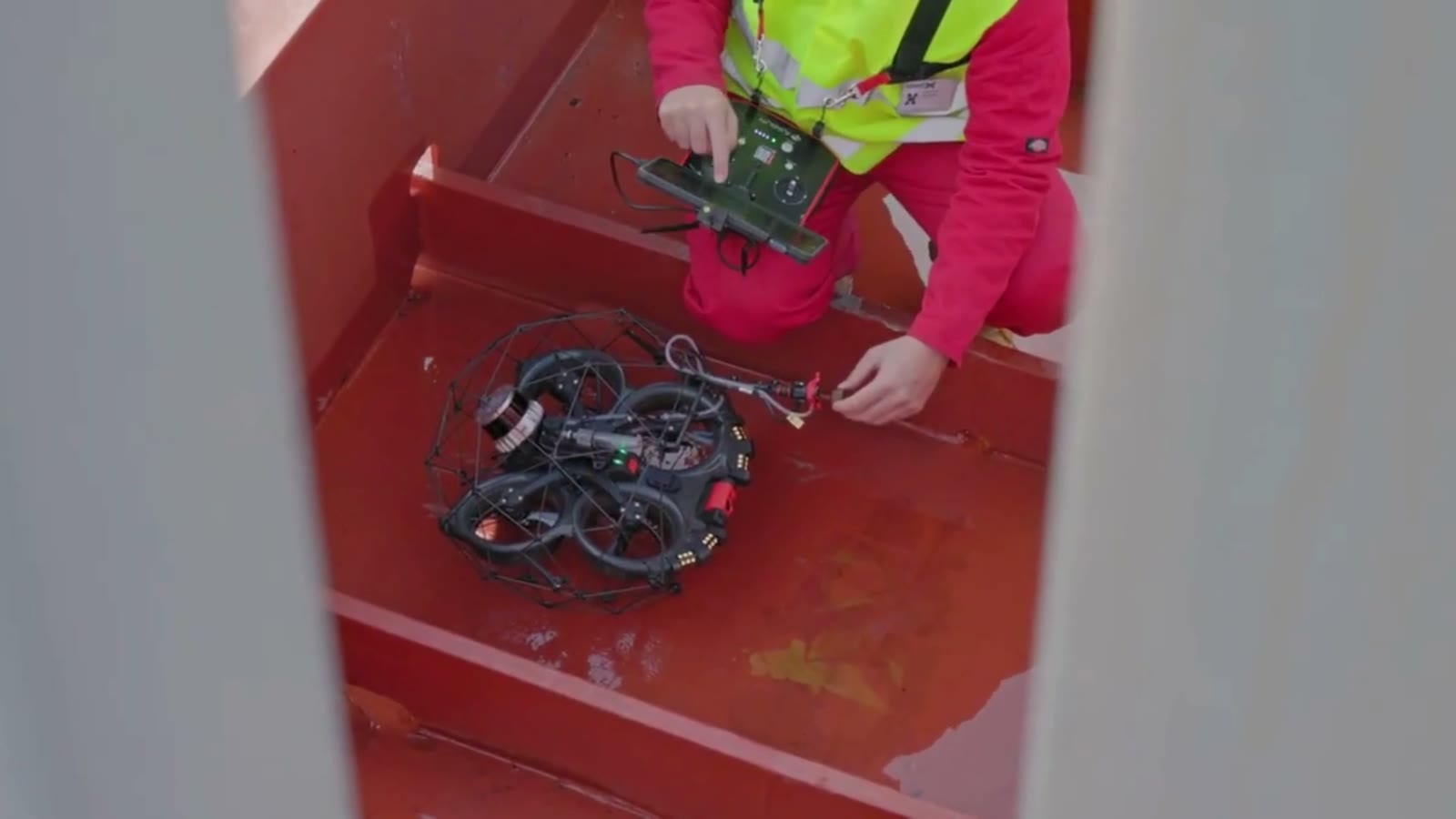
  • Confined-space drones for tanks, holds and voids
  • Magnetic crawlers with ultrasonic thickness capability
  • ROV inspection for underwater and flooded spaces

Get a quote

Tell us the vessel, the port and the window. Scoped reply, usually the same working day.

Or call the 24/7 desk on +91 92365 20609

The most dangerous part of a traditional close-up survey is not the inspection — it is getting a person to the inspection point. Staging in a ballast tank, entry into an oxygen-depleted void, or working at height in a cargo hold carries risk that the inspection itself does not.

Remote inspection technology removes that exposure. Confined-space drones, magnetic crawlers and ROVs deliver high-resolution imagery and thickness readings from structure nobody has to reach, and classification societies increasingly accept RIT in place of conventional close-up survey for defined scopes.

What you get

  • Confined-space drones for tanks, holds and voids
  • Magnetic crawlers with ultrasonic thickness capability
  • ROV inspection for underwater and flooded spaces
  • Eliminates staging cost and confined-space exposure
  • High-resolution imagery with defect location mapping

Scope of work

What is included as standard. Anything outside this is quoted separately and flagged before mobilisation, never added afterwards.

  1. 01

    Drone internal survey

    Collision-tolerant drones survey ballast tanks, cargo holds, voids and chain lockers, producing high-resolution imagery of structure at height.

  2. 02

    Crawler thickness measurement

    Magnetic crawlers take ultrasonic thickness readings on shell plating and structure without staging or rope access.

  3. 03

    ROV inspection

    Remotely operated vehicles inspect flooded spaces, sea chests and underwater structure where diver access is impractical.

  4. 04

    Data processing and mapping

    Imagery and readings are processed into a located, indexed record so findings can be tied to specific structural members.

  5. 05

    Survey support

    Live feed to the attending surveyor, with the ability to revisit any area on request during the inspection.

How we deliver it

  1. 01

    Feasibility and class liaison

    We confirm with the society that RIT is acceptable for the intended survey scope before it is relied upon.

  2. 02

    Space preparation

    Spaces are ventilated, lit and confirmed suitable for equipment deployment.

  3. 03

    Remote inspection

    Equipment is flown or driven through the planned inspection programme with live monitoring.

  4. 04

    Reporting

    A located, indexed report with imagery, readings and findings is issued for the class file.

Frequently asked

Will class accept drone inspection instead of close-up survey?

For many scopes yes, but acceptance is scope-specific and remains the society's decision. We establish it in writing before the survey rather than presenting a report and hoping.

Can drones take thickness readings?

Some platforms carry UT probes, but for reliable gauging on structure we generally prefer crawlers or conventional technicians, using drones for visual assessment and to target where gauging is actually needed.

Get in touch

We always ready to serve you.

Tell us the vessel, the port and the window. You get a scope, a crew size and an honest duration — usually the same working day.