25 August 2026·6 min read·Cleanship Marine Services
Ask three superintendents what UWILD stands for and you will get three answers, at least one of which will be an in-water survey by another name. The distinction matters commercially, because one of them can defer a dry docking and the other cannot.
An in-water survey is an inspection method
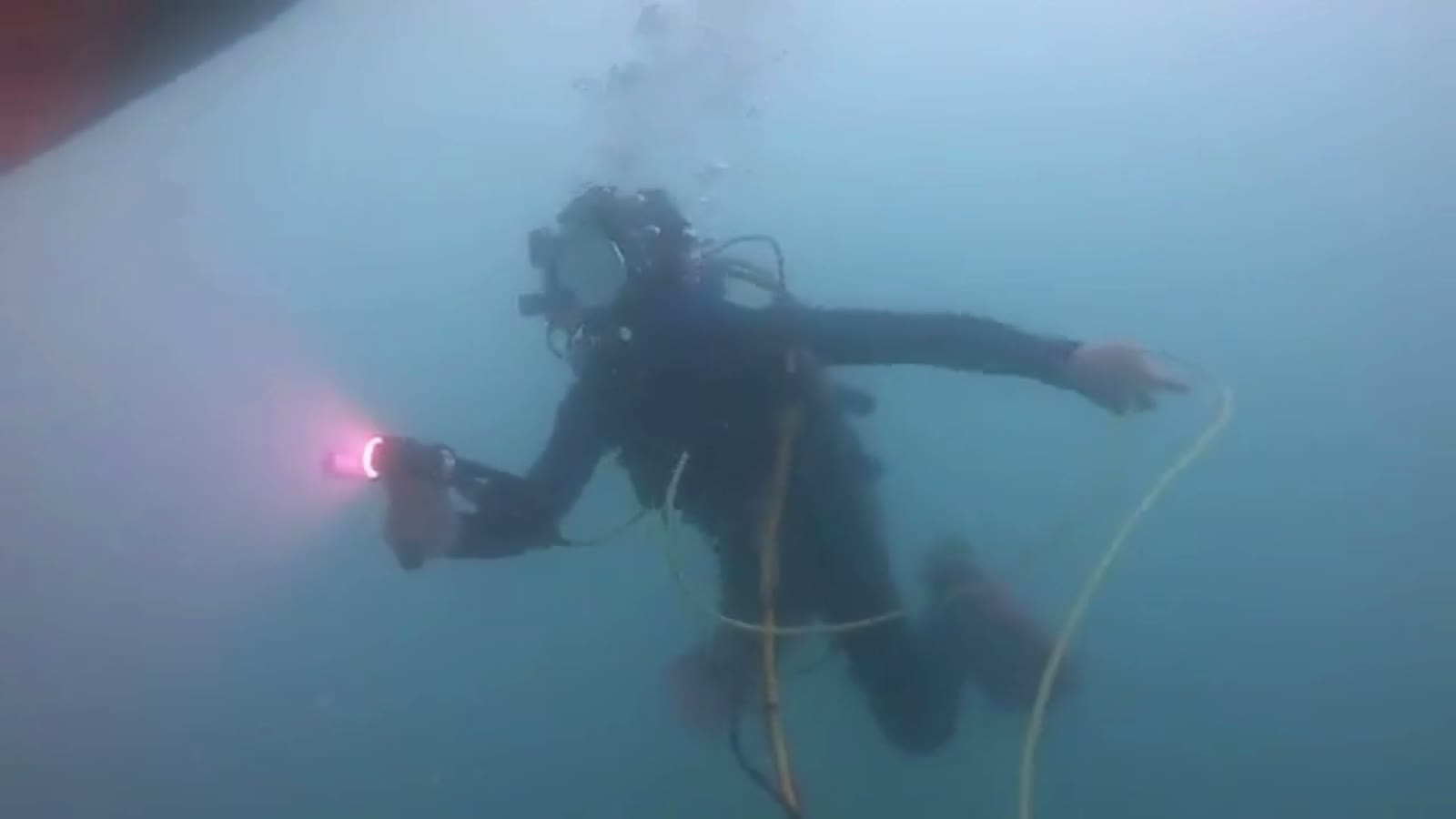
An in-water survey is exactly what it sounds like: divers inspect the underwater hull, rudder, propeller, stern gear and sea chests while the vessel is afloat, with the findings recorded and reported. It can be commissioned for any reason at all — a suspected grounding, a vibration complaint, a pre-purchase check, a fouling assessment before fixing a voyage. Nobody has to approve it and nothing depends on it.
That is the version most vessels use most of the time, and it is genuinely useful. A documented condition record costs a fraction of a dry docking and answers most of the questions a technical department actually has.
UWILD is a survey credit
UWILD — Underwater Inspection In Lieu of Drydocking — is a formal substitution. The classification society accepts the in-water inspection *in place of* an intermediate docking survey that would otherwise require the vessel to come out of the water. That is where the money is: a deferred docking is off-hire that never happens.
Because it substitutes for a statutory requirement, the conditions are exacting in a way an ordinary in-water survey's are not. The vessel has to be eligible. The contractor has to hold approval. The surveyor has to attend and has to be able to see the structure in real time. The hull markings have to let them locate any feature precisely. And the whole thing has to be documented to a standard that survives review.
What determines eligibility
Eligibility is not a judgement call made on the day; it is a set of conditions checked in advance. Vessel age is the first — older tonnage is progressively restricted, and past a certain point the substitution is simply not available. Vessel type matters, class notation matters, and the survey history matters: a vessel with outstanding conditions of class is a different conversation from one with a clean record.
This is the step that goes wrong most often, and it goes wrong expensively. A dive team mobilised, a surveyor booked and a berth window held, then the discovery that the substitution was never available for that hull. Eligibility gets confirmed before cost is committed, not after.
What has to be true before the surveyor arrives
The surveyor needs to see the structure, which means the structure has to be visible. In a port with genuinely clear water that is a low bar. In a river port with near-zero visibility it may not be achievable at all for the scope requested, and the honest answer at quoting stage is that the attendance should be booked somewhere else.
The hull markings are the other precondition and the one most often overlooked. The surveyor has to be able to say precisely where a finding is — frame number, strake, distance from a reference — and that only works if the reference marks exist and are legible. A hull whose markings have been painted over is a hull where every finding is approximate.
Where the condition warrants it, the survey areas are cleaned before the attendance rather than during it. Cleaning while a surveyor watches is time nobody is paying for.
The practical answer
If the question is *what condition is my hull in*, an in-water survey answers it, and it can be done at almost any port with almost any notice. If the question is *can I defer the docking*, that is a UWILD, and it starts with an eligibility check and a conversation with class — not with a dive team.
The two run on the same equipment and often the same attendance. What separates them is the paperwork, and the paperwork is the part that is worth money.
Frequently asked
Is UWILD the same as an in-water survey?
No. An in-water survey is an inspection method that anyone can commission for any reason. UWILD is a formal substitution accepted by the classification society in place of a docking survey — it requires vessel eligibility, an approved contractor, surveyor attendance and a documented programme. Every UWILD involves an in-water survey; most in-water surveys are not UWILD.
What makes a vessel eligible for UWILD?
Age, type, class notation and survey history, checked against the classification society's rules before anything is booked. Older tonnage is progressively restricted and past a certain point the substitution is not available at all. Outstanding conditions of class change the answer. This is confirmed before cost is committed, not discovered after mobilisation.
Can UWILD be done in poor visibility?
Sometimes, but not for every scope, and it has to be agreed in advance on a close-quarters, high-intensity lighting basis. In a river port with near-zero visibility some scopes will simply not be accepted. The honest answer at quoting stage is that the attendance should be planned for a port where the water will support it.
Does the vessel go off hire for a UWILD?
No — that is the entire commercial argument for it. The inspection is carried out with the vessel afloat, at the berth or the anchorage, and in many cases alongside cargo operations. The deferred dry docking is the off-hire that never happens.